The Row 90’s Bag: The Quiet Riser
There is usually one model per brand that rises without any campaign pushing it. In this case the 90’s Bag, a small shoulder shape, has gone from a footnote on the accessories page to the model most frequently named as the house’s riser. It sits at the accessible end of the range, in a category that rarely gets written about at all. The bag kept appearing in listings until the market caught on. This is a feature about that climb, what the evidence actually supports, and the common mistake of reading attention as a promise about value. The figures are genuine, but what they count is narrower than most people assume.
What the Bag Actually Is
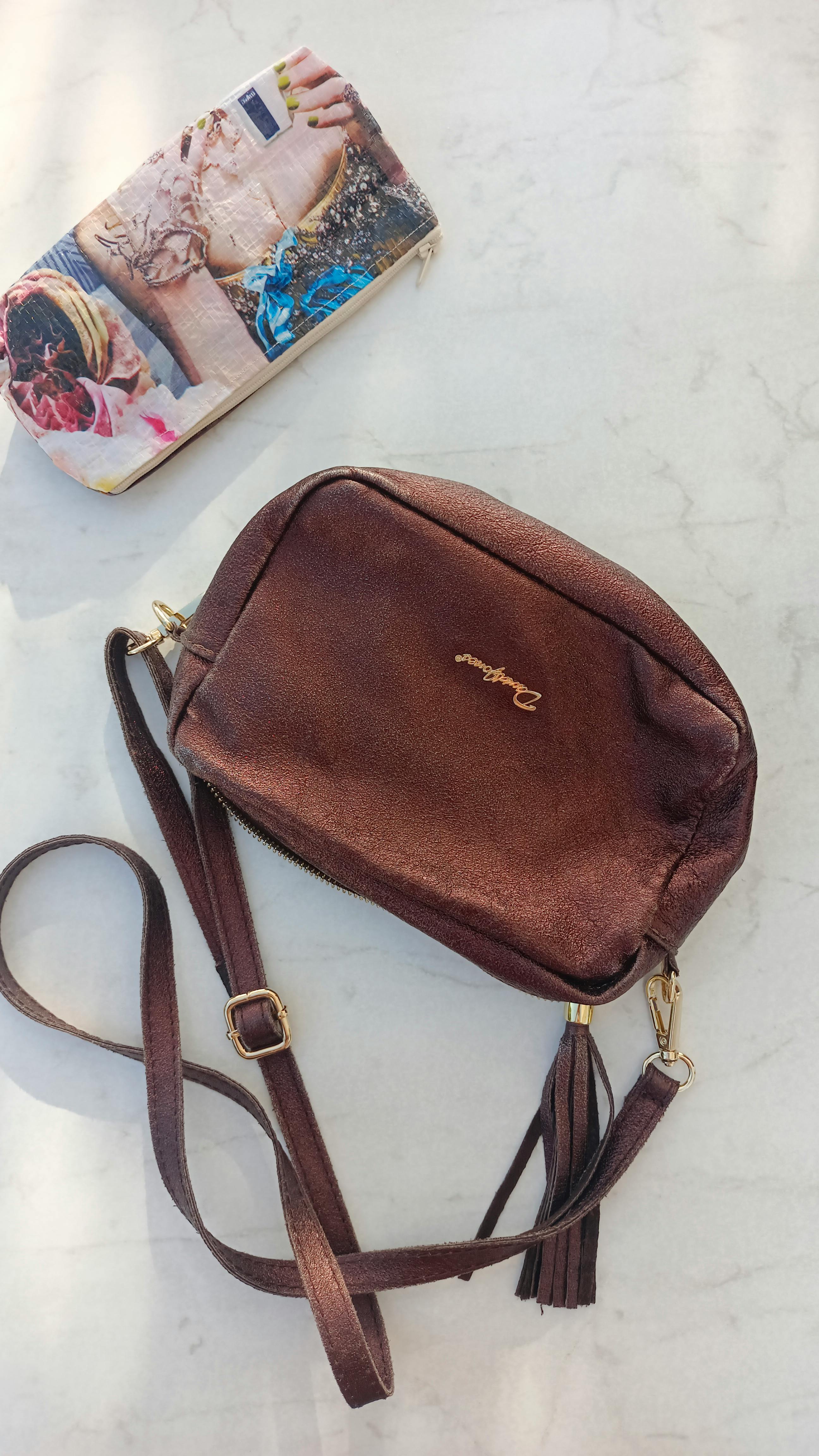
The 90’s Bag belongs to the small bags and clutches end of the range rather than the tote or top-handle families. A compact shoulder shape, it follows the principles governing the row bag range as a whole: nothing on the outside declares the maker. There is no logo plaque, no monogram, no contrast stitching used as a signature. Identification comes from silhouette, proportion and construction, plus a small exterior stamp placed to blend in and an interior stamp. Hardware is palladium-plated in a matte or brushed finish rather than a bright shine. The house treats linings as materials rather than advertising, using nappa, lambskin, calfskin and cotton herringbone instead of logo jacquard.
Where It Sits on Price, Exactly
At an observed 2026 market price of $1,090, the 90’s Bag lands firmly in the entry band. The related 90’s Shoulder was recorded at $1,450 in its own right. The Boone Tote at $900, the N/S Park Crossbody at $1,290, the Half Moon at $1,390 and Idaho at $1,420 populate an entry band running roughly $590 to $1,500. Above it, the middle band opens near $1,550, while flagships like the Soft Margaux 10 at $3,650 sit far higher. therowbag The point is that this is one of the least expensive ways into the house, which explains a good deal of the interest. Read them as observed market prices from a single moment, never as an official list.
The Figure Everyone Quotes
One statistic drives almost all of the coverage of this model, and it is worth stating precisely. The figure: eBay search volume for the 90’s Bag reported up about 55 percent year over year as of April 2025, which flagged it as the riser in the house’s secondary market. That is a genuine, sourced figure and it is not nothing. Look closely at what it counts, though, which is how many people typed the name into a search box on one platform across one period. The metric is one of demand interest. It is neither a resale price index nor a retention percentage nor a forecast; presenting it as proof of appreciation swaps one kind of data for another.
The Reach and the Limits of a Search-Volume Figure
Search interest is an early indicator, and treating it as exactly that is perfectly reasonable. When searches rise, listings and viewers per listing usually follow, which can tighten the gap between asking and selling prices. What it cannot tell you is what those bags actually sold for, how many transactions closed, or whether prices moved at all. Two products with identical search growth can move in opposite directions once money changes hands. Most resale predictions fail in exactly that gap between attention and realised price. If you are browsing listings marked the row for sale, look at sold prices, not asking prices, since only one is a measurement.
How to read the signal honestly
One simple discipline keeps the distinction straight. Ask what each number counts, who counted it, and over what window, before quoting it. Whenever the 55 percent figure is quoted, so should its framing: searches, one platform, to April 2025. Value retention is another thing: it compares observed resale with original retail, so it genuinely reports on price. Both are useful, but they are not interchangeable. Confusing them turns a modest observation into an inflated claim within three retellings.
Claim Against Evidence
The table separates the claims circulating about this model from what the data actually supports. Each row matches a statement with the documented figure behind it, then names what it measures. Read the right-hand column closely, because it is where most of the confusion originates. The retention percentages come from Rebag’s CLAIR 2025 report on brand and model-level value retention. The search-volume figure comes from different reporting on eBay activity. Any row bags overview quoting these numbers should say what each one counts. Watch the final row in particular, because the absence of a figure is itself information.
| Circulating claim | The documented figure | What it really measures |
|---|---|---|
| The 90’s Bag is rising | Up about 55% year over year in eBay search volume, April 2025 | Interest measured on one platform, not price |
| The brand retains value | 97% brand-level retention, CLAIR 2025 | Brand-wide resale against retail, 2025 data |
| Totes lead the resale market | N/S Park Tote at 146% retention | Model-level figure, the highest in the study |
| The Margaux goes up in value | 107% retention for the Margaux Tote | Model-level resale against retail |
| Small bags hold up too | 106% retention for the Half Moon shoulder | Model-level resale against retail |
| Everything from the brand appreciates | Discounting hits canvas, nylon, sisal and seasonal colours | Contradicted; strength sits in neutral calfskin |
| The 90’s Bag has a proven resale multiple | No such published figure | Not established; search interest is all that is documented |
Why This Bag, and Why Now
Rising interest in a cheap bag from an expensive house usually has a structural explanation. At an observed $1,090 this is among the lowest-cost routes into row handbags, and entry points attract volume. A second factor is supply pressure higher up the range. Reports in 2025 widely held that the Margaux, the house’s flagship, had been pulled from third-party retailers, though no official confirmation ever came from the brand, and the official site now shows the Soft Margaux and the Margaux Shoulder. Attention travels to the same design language when the flagship is hard to find. And that language does carry down, since hardware finish, stamp discretion and lining philosophy hold from the cheapest bag to the most expensive.
The Limits of the Rise
The omitted part is also the protective one. The secondary market does not reward all the row bags equally, and the exceptions are predictable. Canvas, nylon, sisal and seasonal-colour pieces reliably discount, while appreciation stays concentrated in black and neutral calfskin in the signature silhouettes. That is observed market behaviour rather than investment advice, and none of it constitutes a guarantee about any individual bag. Even flattering data does not make a handbag a financial instrument, and the data here never reaches price. The points below are worth holding onto.
- Search interest is not price movement, and the two can diverge sharply.
- It is material, not model, that decides this, with neutral calfskin behaving differently from canvas or nylon.
- Later discounting is most likely for seasonal colours.
- The CLAIR retention figures cover other models, not this one.
- Realised prices answer to condition and completeness far more than any headline percentage.
Buying One Without Getting Caught Out
Rising search interest brings rising counterfeit supply, the least glamorous consequence of popularity. There is no public serial number, date code or authenticity card system for these bags, so no paperwork can settle the question for you. As of 2024 and 2025, counterfeits are reported to survive photograph inspection, so in-hand checks and platform authentication have taken over the advice. Look at stitching first: machine-precise, even density, no fraying or wandering lines, with painted edges showing no overflow, bubbling or thin coverage. Next, handle the leather: substantial and soft together, absorbing light rather than reflecting it, while fakes come across as stiff, thin or plasticky. Check that the interior stamp is crisp and centred, and that hardware is matte or brushed, solid and precise in its closing action. Sources flag Poshmark and eBay as carrying higher counterfeit risk, so buy through authenticated channels where you can.
Where That Leaves It
The 90’s Bag deserves its reputation, though for reasons more ordinary than the coverage implies. A logo-free, well-made small bag at the accessible end of a range whose standards hold steady regardless of price. It carries the same hardware finish and lining philosophy as pieces costing five times more, which is a real argument in its favour. A list of top row bags by price will never include it, and it does not need to. The documented rise is a search-interest figure from April 2025, about 55 percent year over year on one platform, and should be quoted that way. Buy it because it suits how you carry things and because $1,090 buys a genuinely considered object. Treat any appreciation as a possible side effect of that decision, never as the reason for it.